Services
IoT Development Services — From Sensor to Dashboard
I provide IoT development services across the full chain: hardware integration (Raspberry Pi, Arduino), MQTT device communication, a reactive Java / Spring Boot backend, and a live web dashboard. Most agencies hand this to a team of specialists; when you hire an IoT developer here, one engineer is accountable from the sensor to the screen. The proof is in production: AetherMesh, an enterprise asset-management platform I built, runs on a fully meshed network tracking hundreds of physical assets across multiple sites as a multi-tenant SaaS — with sub-second dashboard latency on live telemetry and a published SDK that let third-party middleware teams integrate in days instead of weeks. If you need asset tracking, remote monitoring, or smart-facility management, the whole stack is one engagement with one developer.
Ideal for: Asset tracking, remote monitoring, smart facility management
Pricing
Fixed-bid quote within 48 hours of your brief — no hourly-billing surprises
Availability
Response within 24 hours; new projects typically start within 1–2 weeks
Engagement
Fixed-bid project, ongoing retainer, white-label for agencies, or team augmentation
Track record
Top Rated Plus on Upwork · 4.9★ across 43 reviews on Freelancer · Top 3% globally
What does end-to-end IoT development include?
An IoT system is really several systems that have to agree with each other — and every boundary between them is a place the project can fail:
The device layer is the hardware itself — a Raspberry Pi reading industrial sensors, an Arduino driving relays, or an off-the-shelf tracker with its own firmware — and the code that samples, buffers, and ships its readings without losing data when the network drops. The transport layer moves those readings reliably; in most of my builds that means MQTT, because a publish-subscribe broker handles thousands of intermittently-connected devices far more gracefully than polling an HTTP API ever will. Get either of these wrong and no amount of dashboard polish will save the project.
The backend layer is where readings become records: an ingestion service that validates and timestamps telemetry, persists it for querying, and evaluates the rules that decide when a reading is an event worth alerting on. I build this layer in Java and Spring Boot, using reactive programming where throughput demands it — the same stack that carries the rest of my backend work, so an IoT engagement doesn't bolt a second technology culture onto your product.
The presentation layer is the live dashboard, typically React or Angular over WebSockets, where the mark of a healthy pipeline is latency: on AetherMesh, a reading leaving a device reaches the operator's screen in under a second.
The reason to buy all the layers as one engagement is simple: a firmware contractor, a backend team, and a dashboard agency can each do their part, and the system still doesn't work as a whole — because nobody owned the boundaries.
Which protocols and hardware do I work with?
MQTT is the backbone of most of my connected systems. It is a lightweight publish-subscribe messaging protocol designed for constrained devices and unreliable networks — devices publish readings to named topics on a broker, and any number of backend consumers subscribe without the devices knowing or caring who is listening. That decoupling is what makes an IoT fleet manageable: you can add consumers, replay data, and take services down for deployment without touching a single device in the field. I design topic hierarchies, configure brokers, tune quality-of-service levels for the delivery guarantees each message class actually needs, and build the Spring Boot subscribers that turn the stream into application state.
On the hardware side, my builds run on Raspberry Pi where the device needs real computing — local buffering, protocol translation, on-device decisions — and Arduino-class microcontrollers where the job is reading sensors and driving outputs at minimal cost and power. For GPS and vehicle tracking hardware I work at the protocol level: on a production fleet system I forked the open-source Traccar server and implemented a full device-protocol decoder in Java for hardware Traccar didn't support out of the box. If your devices speak something proprietary, that decoder work is a solved problem here, not a research project.
What IoT systems have I shipped to production?
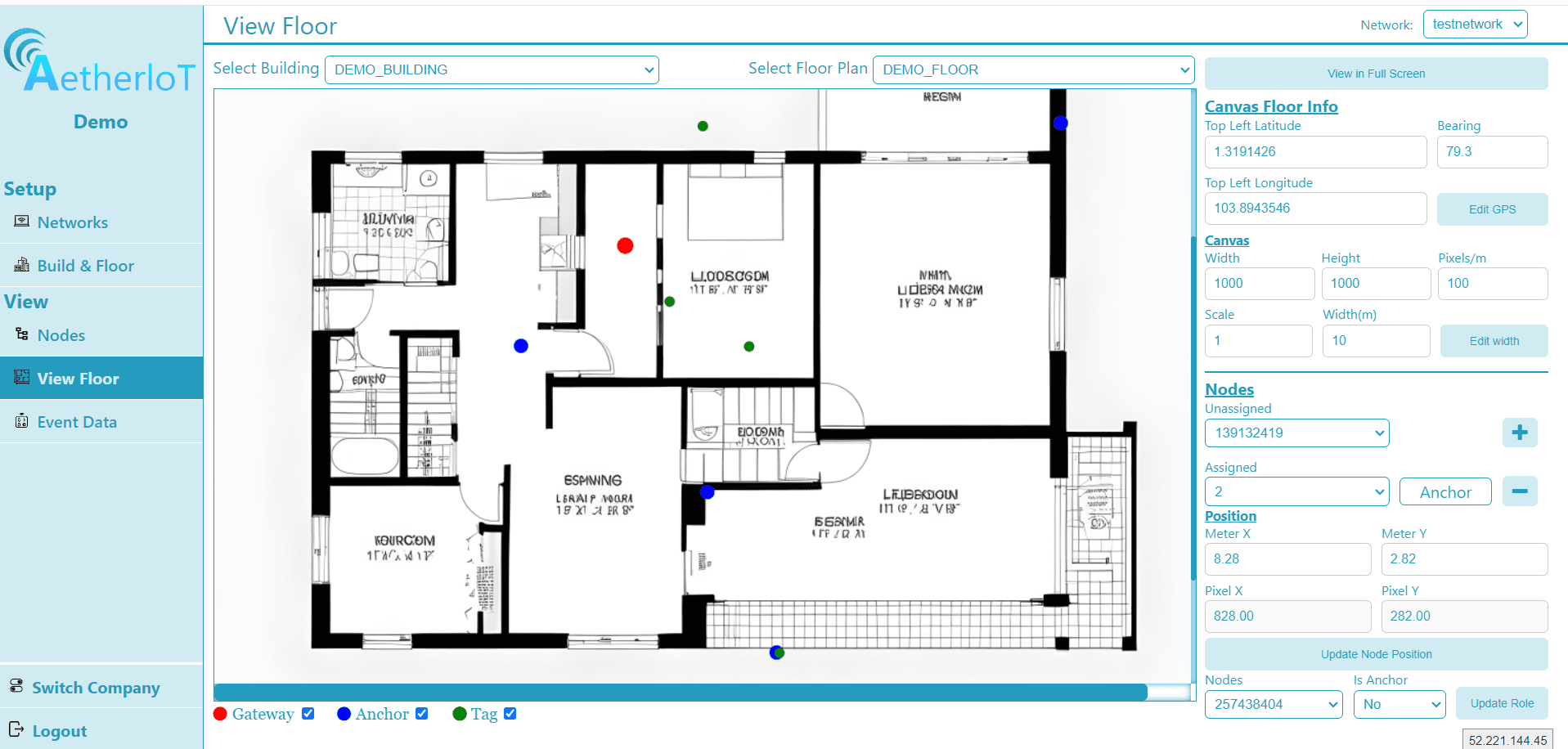
AetherMesh is the flagship: an enterprise IoT asset-management platform tracking hundreds of physical assets across multiple sites, running as a multi-tenant SaaS on a fully meshed network. Live telemetry reaches the dashboard with sub-second latency, and the platform exposes a published SDK that let third-party middleware teams complete their integrations in days instead of weeks — the difference between an internal tool and a platform other teams can build on.
The fleet side of my IoT work runs on Traccar: for one client I implemented a BCE protocol decoder, fixed server-side timestamp normalization so every position record carried accurate device time, and built a bidirectional integration layer pushing live positions into their external fleet-management system. And where the physical world meets regulation, Legionella 360 — a multi-tenant compliance SaaS for water-safety risk management — shows the same sensor-to-record discipline applied to biological sampling data under Italy's ISTISAN 22/33 guidelines.
How do you keep field data trustworthy?
Telemetry is only worth what its worst reading is worth, and field conditions attack data quality in predictable ways: devices buffer through outages and flush hours of readings in a burst, clocks drift on hardware that lost power, and firmware bugs eventually send something malformed. The defenses are architectural, not heroic:
- Log locally first, ship second — Outages cost latency instead of data.
- Trust device time, validated — Every reading carries the device's own timestamp, sanity-checked against a plausible window — because arrival time turns every network hiccup into corrupted history.
- Validate and deduplicate at ingestion — Field-by-field checks before anything persists, so at-least-once transport guarantees don't become duplicate records.
- One honest narrator — Dashboards read only from the validated backend, never raw from the broker — keeping the live view and the historical record in agreement.
This is the discipline I've been hired to retrofit — the fleet engagement began with positions arriving out-of-order and duplicated into the client's downstream system — and the discipline AetherMesh was built on from day one. The difference in cost between those two orderings is most of the argument for getting the ingestion boundary right before scale arrives. The full pattern, with code, is in my cloud data logging field guide.
How does an IoT proof of concept work?
Most IoT projects should not start with a platform build — they should start with a proof of concept that retires the riskiest unknowns for a fraction of the cost. A typical PoC scope here is one real device (your chosen hardware or a Raspberry Pi stand-in), a configured MQTT broker, a minimal Spring Boot ingestion service, and a bare-bones live dashboard proving the full path: physical reading to database row to pixel on screen. What it deliberately excludes is everything that only matters at scale — multi-tenancy, user management, alert workflows — because those are engineering, not risk.
What you get out of a PoC is more than a demo. You learn whether your chosen hardware actually behaves under your field conditions, what the telemetry volume really looks like, and where the integration pain will be — and the PoC code is written to production standards, so it becomes the seed of the real system rather than a throwaway. If the concept doesn't survive the PoC, you've spent weeks learning that instead of quarters.
Can the platform be multi-tenant SaaS from day one?
Yes — and if SaaS is the business model, it should be, because tenancy is the single decision that's cheapest at the first schema and most expensive as a retrofit.
Multi-tenant IoT has its own edge the web version doesn't: the devices themselves belong to tenants. Isolation has to hold from the broker's credential and topic structure through ingestion and storage to every dashboard query — a tenant's sensor must be unable to publish into another tenant's stream even if it misbehaves, and no report may join across tenants by accident.
AetherMesh is the working proof: multi-tenant from its first schema, tracking assets across multiple sites and organizations on one platform, with a published SDK that gives third parties integration access inside the same isolation rules. Legionella 360 applies the same structure to compliance data, where role separation across five user types is a regulatory feature, not a convenience. If your product is 'our monitoring, offered to many customers', tenancy belongs in the proof-of-concept conversation, not the year-two backlog.
What does custom IoT development cost?
Every IoT quote here is a fixed bid — you get a number within 48 hours of your brief, and it doesn't drift with the hours. What moves that number is scope, and in IoT four factors dominate: how exotic the hardware and protocol work is (a standard MQTT device fleet is cheap to integrate; a proprietary protocol needs a decoder written); how much the dashboard has to do beyond charts (alerting rules, geofencing, multi-site views); whether the platform is single-tenant or a multi-tenant SaaS with isolation and roles; and how many existing systems the telemetry has to flow into.
The way to control cost is sequencing, not haggling: start with the proof of concept above, let it settle the risky unknowns, and then fix-bid the platform build on what the PoC taught us. Clients who follow that path spend less in total than those who commission a platform on day one — because the expensive mistakes get made cheaply first. For the fuller economics — what published market ranges actually mean, the five drivers that move them, and where IoT budgets leak — I've written an honest cost breakdown as a standalone guide, linked below.
How is an IoT deployment secured?
Security in connected systems is mostly about doing the unglamorous things before the fleet ships, because retrofitting them onto deployed hardware is the most expensive kind of busywork. The baseline I build to:
- TLS everywhere — Every broker and API connection — telemetry and credentials never cross networks in the clear.
- Per-device credentials — Never a shared fleet secret, so one compromised or decommissioned device can be revoked without re-provisioning everything in the field.
- Topic-level authorization — A device can publish only as itself.
- No broker credentials in clients — Dashboards and integrations read from the validated backend instead.
On the platform side, the same multi-tenant isolation that keeps customers' data apart is a security boundary, not just a product feature.
None of this is exotic, and that's the point: connected-system security failures are overwhelmingly failures of omission — the shared password, the open broker port, the device nobody could revoke — rather than sophisticated attacks. The hardening checklist is part of every build here, and the broker-level specifics are documented in my MQTT integration guide.
How do we work together?
Four engagement models, depending on what you need:
- Fixed-bid project — A scoped build with a quoted price and a defined deliverable — the default for new systems.
- Ongoing retainer — Monthly capacity for evolving and maintaining a live platform after launch — how production IoT systems stay healthy.
- White-label — I deliver under your agency's brand, NDA-friendly, with your client none the wiser. Several of my enterprise case studies are published anonymized for exactly this reason.
- Team augmentation — A senior backend/IoT engineer embedded in your existing team for the duration of a push.
All four run remote-first, worldwide, with a response inside 24 hours and new engagements typically starting within one to two weeks.
Case Studies
What production work backs this up?
FAQ
What do clients ask before hiring?
Can you work with hardware we've already chosen?
Yes — and it's usually the right call to keep it. If your devices speak MQTT or any documented protocol, integration is straightforward: I configure the broker, design the topic structure, and build the ingestion path around what the hardware already emits. If the protocol is proprietary or undocumented-but-observable, I write a decoder for it — that's exactly what the Traccar BCE protocol work was. The only hardware I'll push back on is hardware that can't be made reliable: no buffering, no reconnect behavior, no way to trust its timestamps. In that case I'll show you the failure mode before you've built a platform on top of it.
Do you host and maintain the system after launch?
IoT platforms are living systems — devices get added, firmware changes, telemetry volume grows — so I offer an ongoing retainer for exactly this: monitoring, dependency updates, protocol additions, and evolution of the dashboard as your operation changes. Deployment lands on your infrastructure (your cloud account, your keys, your data), so you're never locked to me: everything is documented and handed over, and the retainer is a choice, not a hostage situation. Several production systems I've built run under long-term support arrangements of this shape.
Can you take over or rescue an existing IoT system?
Yes — rescue work is a recurring engagement shape here, because connected systems fail in the seams between vendors, and adding another vendor to a seam problem rarely fixes it. The fleet case study started exactly that way: position data arriving out-of-order and duplicated into the client's downstream system, with the cause sitting below the dashboards everyone had been debugging — in protocol decoding and timestamp handling. A takeover starts with a read-only assessment of the live system (data quality first, then the ingestion path, then the code), which produces a written diagnosis and a fixed-bid quote for the repair. If the assessment shows the system just needs operations rather than engineering, I'll say so.
What if we don't know yet whether our idea is technically feasible?
That's precisely what the proof-of-concept engagement is for, and it's the cheapest honest answer available. One real device, the transport, a minimal ingestion path, and a bare live dashboard prove the full physical-reading-to-pixel path under your actual conditions — and convert your open questions (will this hardware behave? what's the real telemetry volume? where will integration hurt?) into facts. The PoC is quoted fixed-bid like everything else, its code is written to production standard so it seeds the real build, and if the concept doesn't survive, you've spent weeks learning that instead of quarters. Feasibility risk is a reason to start small, not a reason not to start.
Can you build an IoT asset-tracking or sensor-monitoring system?
Yes. AetherMesh is a Java/Spring Boot + MQTT IoT platform I built for real-time location tracking and sensor monitoring of physical assets across large facilities — deployed as a multi-tenant SaaS tracking hundreds of assets with sub-second dashboard latency. I bridge the hardware layer (Raspberry Pi, Arduino, MQTT) with the backend and dashboard, so the whole stack — sensor to screen — is one engagement.
Can you integrate with our existing systems or third-party APIs?
Yes — API integration, legacy system extension, and database migration are common in most projects I take on. I've connected systems using REST, SOAP, MQTT, and various third-party platforms. If you have existing infrastructure, I'll assess it during discovery and design the integration approach carefully.
More answers on the full FAQ →
Other services
Have a iot systems project in mind? Tell me about it.
Send Project Brief →